A Tulip’s Tale
.JPG)


.JPG)
.JPG)


.JPG)

.JPG)
.JPG)
.JPG)
.JPG)
.JPG)
.JPG)
.JPG)
.JPG)
.JPG)
.JPG)
.JPG)
.JPG)


The word tulip was first mentioned in Western Europe, in the context of “Turkish Letters” of a diplomat Ogier Ghiselin de Busbercq in about 1554. This was the time of Ottomans wore typical Turkish tülbend ("muslin" or "gauze"). The correlation between turban and the Tulip flower came about because the tulip in full bloom resembled a turban. The name Tulip is derived from tulipa or tulipant, tulipe by French and tulīpa in modern Latin.
Did you know that the Tulip can be given as the 11th wedding anniversary flower? It is said that the tulip's velvety black center represents a lover's heart, darkened by the heat of passion.
Tulips as you well know come in various colors and each carry an important meaning:
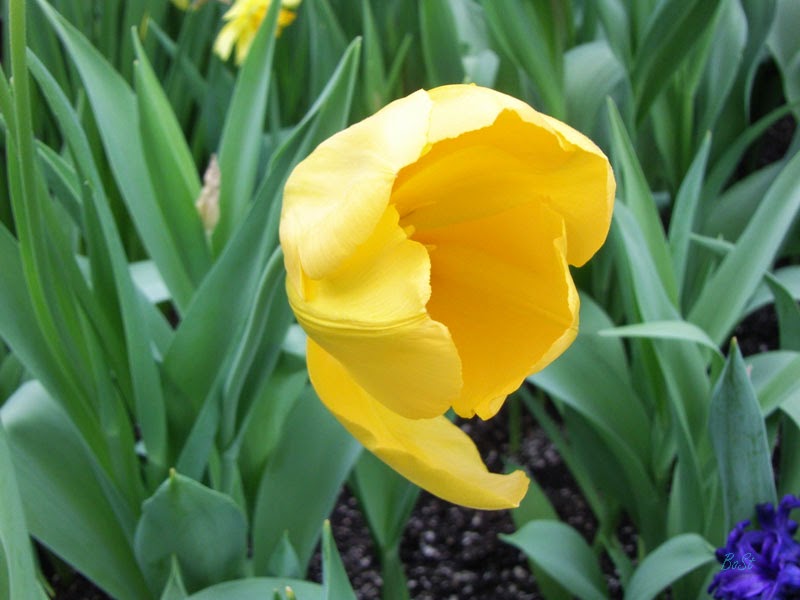
Yellow tulips once were associated with jealousy and hopeless love. Lately however, yellow tulips have gained a sunnier disposition; it now represents hope and cheerful thoughts. You may give a yellow tulip bouquet to a good friend as a caring get-well gift. Yellow is also the color of friendship, which makes it great for a just-because floral gift.
White conveys forgiveness. White tulips are the flowers to pick for an apology bouquet. You may also include with it some chocolates as a worthwhile gesture to elicit a favorable response.
Multi-hued tulips, being the most versatile, can express varied messages to that special someone. For instance, striped tulips may symbolize a lover’s beautiful eyes, as do tulips with blotched, multicolored petals.
Purple represents loyalty. If you want to let her know that she is your queen, choose an arrangement of purple tulips. Purple can also be used to express admiration for a loved one’s accomplishments.
Pink flowers express happiness and confidence. This makes them a very good choice when congratulating a friend on a new job or promotion. The flower meaning of pink tulips is the awakening of love. Pink tulips remind me of the lovely little girl in one of Hans Christian Andersen’s fairy tales: Thumbelina.
Thumbelina is a story about a girl who is born from a tulip flower. One day this thumb-sized girl is kidnapped and was carried far, far away. When the destination was finally reached she was then forced to marry a toad. While in the Toad’s abode however, she comes upon a wounded swallow and with tender loving care, saves him. The ever so grateful swallow, fully recovered, rescues her from her harsh circumstances in return. He then takes her to the Kingdom of Flowers and there she falls in love with and marries the handsome prince of the kingdom. She lives happily ever after.
And finally, Red means perfect love and as well, evokes passion and romance. Did you know that in Persia, people give red tulips when they propose? Red tulips have the meaning of eternal love; therefore it’s an ideal choice for expressing deep affections to that someone special.
Here’s a Turkish legend that may have contributed to this belief. As the tragic story goes, once a handsome prince named Farhad fell madly in love with a beautiful a maiden named Shirin. Capricious fate however saw to it that Shrin met her untimely demise during the digging of a new replacement well for her village. When Prince Farhad learned of this he was so overcome with grief that he rode his horse over the edge of a cliff. It's said that a scarlet tulip sprang up from each droplet of his blood, giving the red tulip the meaning "perfect love."
Then there is this legend that is told in the Netherlands.
Three knights are enamored by a beautiful girl. Each in turn proposes and presents her with a gift. One gives her a crown which indicates fame. The second one presents her with a mighty sword indicative of power. The third gives her gold which is indicative of property.
The beautiful girl remains in a quandary. As she cannot choose one over the other, she seeks the Queen of Flower’s help. She pleads with Her Majesty to change her into a flower, and being granted this request, the lovely girl is transformed into a Tulip. Here, as one can see, the crown is the flower, the sword is the leaf, and the gold is the eventual transformation to a bulb.
Three knights are enamored by a beautiful girl. Each in turn proposes and presents her with a gift. One gives her a crown which indicates fame. The second one presents her with a mighty sword indicative of power. The third gives her gold which is indicative of property.
The beautiful girl remains in a quandary. As she cannot choose one over the other, she seeks the Queen of Flower’s help. She pleads with Her Majesty to change her into a flower, and being granted this request, the lovely girl is transformed into a Tulip. Here, as one can see, the crown is the flower, the sword is the leaf, and the gold is the eventual transformation to a bulb.
One of the Greek myths is about tulips:
Once, there was a pretty girl named Tulip. One day, the god of autumn while he is about, spotted this enchanting beauty and fell deeply in love. His infatuation grew with each encounter even though she blatantly resisted his declaration of love.
When yet again chancing on her while she was picking flowers he accosted her. She in desperation ran off and sought help from the God of Virginity. Kneeling before Artemis, she pleaded with the Goddess to rescue her from the pesky lover, which the Goddess did ... by changing her into a tulip.
Last but not least, here’s a lovely English Folk Tale:
The Tulip Fairies
Once upon a time there was an old woman who lived by herself in a little house. She grew a bed of beautiful multi-colored tulips in her garden, which she would cut and bring into the house, to cheer herself up.
The Tulip Fairies
Once upon a time there was an old woman who lived by herself in a little house. She grew a bed of beautiful multi-colored tulips in her garden, which she would cut and bring into the house, to cheer herself up.
One night she was woken up by the sounds of sweet singing and of babies laughing. She looked out of the window and the sounds seemed to be coming from the tulip bed, but she couldn't see anything. The next morning she walked among her flowers, but there were no signs of anyone having been there the night before.
On the following night she was woken up again by sweet singing and the sound of babies laughing. She rose and stole softly through her garden. The moon was shining brightly on the tulip bed, and the flowers were swaying to and fro. The old woman looked closely and she saw, standing by each tulip, a little fairy mother who was crooning and rocking the flower like a cradle, while in each tulip cup lay a little baby fairy laughing and playing.
The old woman was a kind-hearted soul, and so she stole quietly back to her house, and from that time on she never picked another tulip, nor did she allow her neighbors to touch them.
The tulips grew brighter in color and larger in size day by day, and they gave off a delicious perfume, like that of roses. They began to bloom all the year round too. And every night the little fairy mothers caressed their babies and rocked them to sleep in the flower cups.
Eventually, the day came, as it must, when the good old woman died, and the tulip bed was torn up by people who did not know any better, they didn't know about the fairies, they didn't know about the babies, and instead of tulips they planted parsley, but the parsley withered, and died, and so did all the other plants in the garden, and from that time on nothing would grow there.
But the good old woman's grave grew beautiful, for the fairies sang above it, and kept it green - while on the grave and all around it there sprang up tulips, daffodils, and violets, and all the other lovely flowers of spring.
The End.

.JPG)
.JPG)
.JPG)
.JPG)
.JPG)
.JPG)
.JPG)

.JPG)
.jpg)
.JPG)
.JPG)
.JPG)
.JPG)
.JPG)
.JPG)
.JPG)
.JPG)
.JPG)
.JPG)
.JPG)
.JPG)
.JPG)
.JPG)
.JPG)

.JPG)