Showing posts with label North American Indian Legends. Show all posts

Wednesday, 18 June 2014

Osseo, The Son of the Evening Star


OSSEO, THE SON OF THE EVENING STAR


(From: The Indian Fairy Book , The Original Legends

Author: Cornelius Mathews)


There once lived an Indian in the north who had ten daughters, all of whom grew up to womanhood. They were noted for their beauty, especially Oweenee, the youngest, who was very independent in her way of thinking. She was a great admirer of romantic places, and spent much of her time with the flowers and winds and clouds in the open air. 


Though the flower was homely, it was fragrant—though the wind was rough, it was healthful—and though the clouds were dark, it embosomed the fruitful rain. She knew how, in spite of appearances, to acknowledge the good qualities concealed from the eye. She paid very little attention to the many handsome young men who came to her father's lodge for the purpose of courting her.


Her elder sisters were all sought in marriage, and one after the other they went off to dwell in the lodges of their husbands; but Oweenee was deaf to all proposals of the kind. At last she married an old man called Osseo, who was scarcely able to walk, and who was too poor to have things like others. The only property he owned in the world was the walking-staff which he carried in his hand. Though thus poor and homely, Osseo was a devout and good man; faithful in all his duties, and obedient in all things to the Good Spirit. Of course they jeered and laughed at Oweenee on all sides, but she seemed to be quite happy, and said to them, "It is my choice and you will see in the end who has acted the wisest."

They made a special mock of the walking-staff, and scarcely an hour in the day passed that they had not some disparaging reference to it. Among themselves they spoke of Osseo of the walking-staff, in derision, as the owner of the big woods, or the great timber-man.

"True," said Oweenee, "it is but a simple stick; but as it supports the steps of my husband, it is more precious to me than all the forests of the north."


A time came when the sisters, and their husbands, and their parents were all invited to a feast. As the distance was considerable, they doubted whether Osseo, so aged and feeble, would be able to undertake the journey; but in spite of their friendly doubts, he joined them, and set out with a good heart.

As they walked along the path they could not help pitying their young and handsome sister who had such an unsuitable mate. She, however, smiled upon Osseo, and kept with him by the way the same as if he had been the comeliest bridegroom in all the company. Osseo often stopped and gazed upward; but they could perceive nothing in the direction in which he looked, unless it was the faint glimmering of the evening star. They heard him muttering to himself as they went along, and one of the elder sisters caught the words, "Pity me, my father!"

"Poor old man," said she; "he is talking to his father. What a pity it is that he would not fall and break his neck, that our sister might have a young husband."

Presently as they came to a great rock where Osseo had been used to breathe his morning and his evening prayer, the star emitted a brighter ray, which shone directly in his face.


Osseo, with a sharp cry, fell trembling to the earth, where the others would have left him, but his good wife raised him up, and he sprang forward on the path, and with steps light as the reindeer he led the party, no longer decrepit and infirm, but a beautiful young man. On turning around to look for his wife, behold she had become changed, at the same moment, into an aged and feeble woman, bent almost double, and walking with the staff which he had cast aside.

Osseo immediately joined her, and with looks of fondness and the tenderest regard, bestowed on her every endearing attention, and constantly addressed her by the term of ne-ne-moosh-a, or my sweetheart.

As they walked along, whenever they were not gazing fondly in each other's face, they bent their looks on heaven, and a light, as if of far-off stars, was in their eyes.


On arriving at the lodge of the hunter with whom they were to feast, they found the banquet ready, and as soon as their entertainer had finished his harangue—in which he told them his feasting was in honor of the Evening or Woman's Star—they began to partake of the portion dealt out, according to age and character, to each one of the guests. The food was very delicious, and they were all happy but Osseo, who looked at his wife, and then gazed upward, as if he was looking into the substance of the sky. Sounds were soon heard, as if from far-off voices in the air, and they became plainer and plainer, till he could clearly distinguish some of the words.


"My son, my son," said the voice; "I have seen your afflictions, and pity your wants. I come to call you away from a scene that is stained with blood and tears. The earth is full of sorrows. Wicked spirits, the enemies of mankind, walk abroad, and lie in wait to ensnare the children of the sky. Every night they are lifting their voices to the Power of Evil, and every day they make themselves busy in casting mischief in the hunter's path. 


You have long been their victim, but you shall be their victim no more. The spell you were under is broken. Your evil genius is overcome. I have cast him down by my superior strength, and it is this strength I now exert for your happiness. Ascend, my son; ascend into the skies, and partake of the feast I have prepared for you in the stars, and bring with you those you love.

"The food set before you is enchanted and blessed. Fear not to partake of it. It is endowed with magic power to give immortality to mortals, and to change men to spirits. Your bowls and kettles shall no longer be wood and earth. The one shall become silver, and the other pure gold. They shall shine like fire, and glisten like the most beautiful scarlet. Every female shall also change her state and looks, and no longer be doomed to laborious tasks. She shall put on the beauty of the star-light, and become a shining bird of the air. She shall dance, and not work. She shall sing, and not cry.

"My beams," continued the voice, "shine faintly on your lodge, but they have power to transform it into the lightness of the skies, and decorate it with the colors of the clouds. Come, Osseo, my son, and dwell no longer on earth. Think strongly on my words, and look steadfastly at my beams. My power is now at its height. Doubt not, delay not. It is the voice of the Spirit of the Stars that calls you away to happiness and celestial rest."


The words were intelligible to Osseo, but his companions thought them some far-off sounds of music, or birds singing in the woods. Very soon the lodge began to shake and tremble, and they felt it rising into the air. It was too late to run out, for they were already as high as the tops of the trees. Osseo looked around him as the lodge passed through the topmost boughs, and behold! their wooden dishes were changed into shells of a scarlet color, the poles of the lodge to glittering rods of silver, and the bark that covered them into the gorgeous wings of insects.

A moment more and his brothers and sisters, and their parents and friends, were transformed into birds of various plumage. Some were jays, some partridges and pigeons, and others gay singing birds, who hopped about, displaying their many-colored feathers, and singing songs of cheerful note.


But his wife, Oweenee, still kept her earthly garb, and exhibited all the indications of extreme old age. He again cast his eyes in the direction of the clouds, and uttered the peculiar cry which had given him the victory at the rock. In a moment the youth and beauty of his wife returned; her dingy garments assumed the shining appearance of green silk, and her staff was changed into a silver feather.


The lodge again shook and trembled, for they were now passing through the uppermost clouds, and they immediately after found themselves in the Evening Star, the residence of Osseo's father.


"My son," said the old man, "hang that cage of birds which you have brought along in your hand at the door, and I will inform you why you and your wife have been sent for."

Osseo obeyed, and then took his seat in the lodge.


"Pity was shown to you," resumed the King of the Star, "on account of the contempt of your wife's sister, who laughed at her ill fortune, and ridiculed you while you were under the power of that wicked spirit whom you overcame at the rock. That spirit lives in the next lodge, being the small star you see on the left of mine, and he has always felt envious of my family because we had greater power, and especially that we had committed to us the care of the female world. He failed in many attempts to destroy your brothers and sisters-in-law, but succeeded at last in transforming yourself and your wife into decrepit old persons. You must be careful and not let the light of his beams fall on you, while you are here, for therein lies the power of his enchantment. A ray of light is the bow and arrow he uses."


Osseo lived happy and contented in the parental lodge, and in due time his wife presented him with a son, who grew up rapidly, and in the very likeness of Osseo himself. He was very quick and ready in learning everything that was done in his grandfather's dominions, but he wished also to learn the art of hunting, for he had heard that this was a favorite pursuit below. To gratify him, his father made him a bow and arrows, and he then let the birds out of the cage that he might practice in shooting. In this pastime he soon became expert, and the very first day he brought down a bird; but when he went to pick it up, to his amazement it was a beautiful young woman, with the arrow sticking in her breast. It was one of his younger aunts.


The moment her blood fell upon the surface of that pure and spotless planet, the charm was dissolved. The boy immediately found himself sinking, although he was partly upheld by something like wings until he passed through the lower clouds, and he then suddenly dropped upon a high, breezy island in a large lake.


He was pleased, on looking up, to see all his aunts and uncles following him in the form of birds, and he soon discovered the silver lodge, with his father and mother, descending, with its waving tassels fluttering like so many insects' gilded wings. It rested on the loftiest cliffs of the island, and there they fixed their residence. They all resumed their natural shapes, but they were diminished to the size of fairies; and as a mark of homage to the King of the Evening Star, they never failed on every pleasant evening during the summer season to join hands and dance upon the top of the rocks. These rocks were quickly observed by the Indians to be covered, in moonlight evenings, with a larger sort of Ininees, or little men, and were called Mish-in-e-mok-in-ok-ong, or Little Spirits, and the island is named from them to this day.


Their shining lodge can be seen in the summer evenings, when the moon beams strongly on the pinnacles of the rocks; and the fishermen who go near those high cliffs at night, have even heard the voices of the happy little dancers. And Osseo and his wife, as fondly attached to each other as ever, always lead the dance.


The End

Thursday, 22 May 2014

The Enchanted Moccasins


THE ENCHANTED MOCCASINS


A moccasin, usually brown in color, was the preferred footwear of many indigenous peoples of North America, hunters, traders and even some of the European settlers. The word moccasin is derived from an Algonquian language Powhatan word makasin and the Proto-Algonquian word maxkeseni (meaning shoe). It is made of durable deerskin or other soft leather which protects the foot while allowing the wearer to feel the ground. Though sometimes it’s worn inside, it chiefly was intended for outdoor use. The sole is soft and flexible and sides are made of one piece of leather that is stitched together at the top sometimes with an additional panel of leather. The upper part is usually adorned with meticulous embroidery or beading.


Here’s a North American Indian legend about moccasins:

The Enchanted Moccasins


From: The Indian Fairy Book , The Original Legends

Author: Cornelius Mathews


A long, long time ago, a little boy was living with his sister entirely alone in an uninhabited country, far out in the north-west. He was called the Boy that carries the Ball on his Back, from an idea that he possessed supernatural powers. This boy was in the habit of meditating alone, and asking within himself, whether there were other beings similar to themselves on the earth.

When he grew up to manhood, he inquired of his sister whether she knew of any human beings beside themselves. She replied that she did; and that there was, at a great distance, a large village.


As soon as he heard this, he said to his sister, "I am now a young man and very much in want of a companion;" and he asked his sister to make him several pairs of moccasins.

She complied with his request; and as soon as he received the moccasins, he took up his war-club and set out in quest of the distant village.


He traveled on till he came to a small wigwam, and on looking into it he discovered a very old woman sitting alone by the fire. As soon as she saw the stranger, she invited him in, and thus addressed him:

"My poor grandchild, I suppose you are one of those who seek for the distant village, from which no person has ever yet returned. Unless your guardian is more powerful than the guardians of those who have gone before you, you will share a similar fate to theirs. Be careful to provide yourself with the invisible bones they use in the medicine-dance, for without these you can not succeed."

After she had thus spoken, she gave him the following directions for his journey:

"When you come near to the village which you seek, you will see in the center a large lodge, in which the chief of the village, who has two daughters, resides. Before the door there is a great tree, which is smooth and without bark. On this tree, about the height of a man from the ground, is hung a small lodge, in which these two false daughters dwell. It is here that so many have been destroyed, and among them your two elder brothers. Be wise, my grandchild, and abide strictly by my directions."

The old woman then gave to the young man the bones which were to secure his success; and she informed him with great care how he was to proceed.

Placing them in his bosom, Onwee Bahmondang, or the Wearer of the Ball, continued his journey, and kept eagerly on until he arrived at the village of which he was in search; and as he was gazing around him, he saw both the tree and the lodge which the old woman had mentioned.


He at once bent his steps for the tree, and approaching, he endeavored to reach the suspended lodge. But all his efforts were in vain; for as often as he attempted to reach it, the tree began to tremble, and it soon shot up so that the lodge could hardly be perceived.

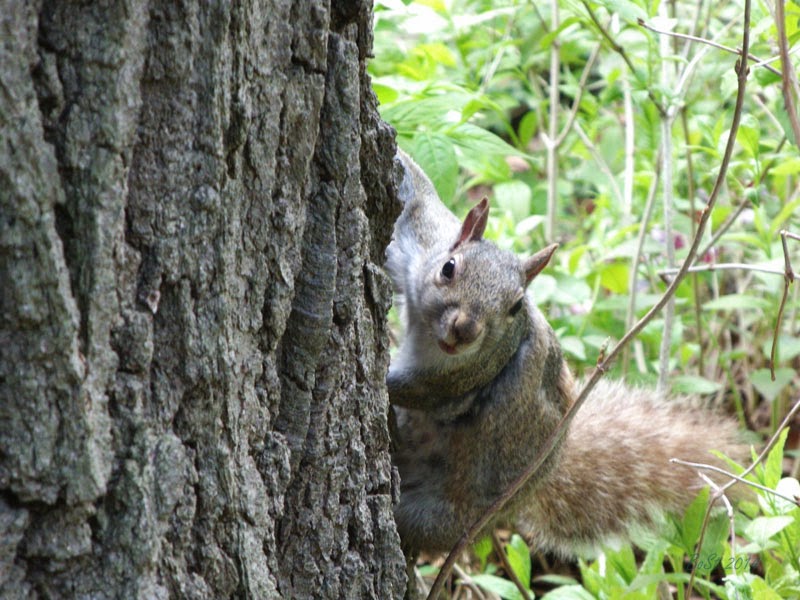
He bethought him of his guardian, and invoking his aid, and changing himself into a squirrel, he mounted nimbly up again, in the hope that the lodge would not now escape him. Away shot the lodge climb as briskly as he might.


Panting, and out of breath, he remembered the instructions of the old woman, and drawing from his bosom one of the bones, he thrust it into the trunk of the tree, and rested himself to be ready to start again.


As often as he wearied of climbing, for even a squirrel cannot climb forever, he repeated the little ceremony of the bones; but whenever he came near the lodge and put forth his hand to touch it, the tree would shoot up as before, and carry the lodge up far beyond his reach.

At length the bones being all gone, and the lodge well-nigh out of sight, he began to despair, for the earth, too, had long since vanished entirely from his view.


Summoning his whole heart, he resolved to try once more. On and up he went, and, as soon as he put forth his hand to touch it, the tree again shook, and away went the lodge.

One more endeavor, brave Onwee, and in he goes; for having now reached the arch of heaven, the fly-away lodge could go no higher.


Onwee entered the lodge with a fearless step, and he beheld the two wicked sisters sitting opposite each other. He asked their names. The one on his left hand called herself Azhabee, and the one on the right, Negahnabee.

After talking with them a little while, he discovered that whenever he addressed the one on his left hand, the tree would tremble as before and settle down to its former place; but when he addressed the one on his right hand, it would again shoot upward.

When he thus perceived that by addressing the one on his left hand that the tree would descend, he continued to do so until it had again settled down to its place near the earth. Then seizing his war-club, he said to the sisters:

"You who have caused the death of so many of my brethren I will now put an end to, and thus have revenge for those you have destroyed."

As he spoke this he raised the club, and with one blow laid the two wicked women dead at his feet.

Onwee then descended, and learning that these sisters had a brother living with their father, who had shared all together in the spoils of all such as the wicked sisters had betrayed, and who would now pursue him for having put an end to their wicked profits, Onwee set off at random, not knowing whither he went.


The father coming in the evening to visit the lodge of his daughters, discovered what had happened. He immediately sent word to his son that his sisters had been slain, and that there were no more spoils to be had, which greatly inflamed the young man's temper, especially the woeful announcement at the close.


"The person who has done this," said the brother, as soon as he had reached the spot, chafing and half beside himself at the gloomy prospect of having no more travelers to strip, "must be that boy who carries the ball on his back. I know his mode of going about his business, and since he would not allow himself to be killed by my sisters, he shall have the honor of dying by my hand. I will pursue him and have revenge."


"It is well, my son," replied the father; "the spirit of your life grant you success. I counsel you to be wary in the pursuit. Bahmondang is a cunning youth. It is a strong spirit who has put him on to do this injury to us, and he will try to deceive you in every way. Above all, avoid tasting food till you succeed; for if you break your fast before you see his blood, your power will be destroyed."

The son took this fatherly advice all in good part, except that portion which enjoined upon him to abstain from staying his stomach; but over that he made a number of wry faces, for the brother of the two wicked sisters had, among numerous noble gifts, a very noble appetite. Nevertheless, he took up his weapons and departed in pursuit of Onwee Bahmondang, at the top of his speed.


Onwee finding that he was closely followed, climbed up into one of the tallest trees, and shot forth the magic arrows with which he had provided himself.

Seeing that his pursuer was not turned back by his arrows, Onwee renewed his flight; and when he found himself hard pressed, and his enemy close behind him, he transformed himself into the skeleton of a moose that had been killed, whose flesh had come off from his bones. He then remembered the moccasins which his sister had given him, and which were enchanted. Taking a pair of them, he placed them near the skeleton.

"Go," said he to them, "to the end of the earth."

The moccasins then left him, and their tracks remained.

The angry brother at length came to the skeleton of the moose, when he perceived that the track he had been long pursuing did not stop there, so he continued to follow it up till he arrived at the end of the earth, where, for all his trouble, he found only a pair of moccasins.


Vexed that he had been outwitted by following a pair of moccasins instead of their owner, who was the object of his pursuit, he bitterly complained, resolving not to give up his revenge, and to be more wary in scrutinizing signs.

He then called to mind the skeleton he had met with on his way, and concluded that it must be the object of his search.

He retraced his steps toward the skeleton, but to his surprise it had disappeared, and the tracks of the wearer of the ball were in another direction. He now became faint with hunger, and lost heart; but when he remembered the blood of his sisters, and that he should not be allowed to enjoy a meal, nor so much as a mouthful, until he had put an end to Onwee Bahmondang, he plucked up his spirits and determined again to pursue.


Onwee, finding that he was closely followed, and that the hungry brother was approaching very fast, changed himself into a very old man, with two daughters, and living in a large lodge in the center of a beautiful garden, which was filled with everything that could delight the eye, or was pleasant to the taste. He made himself appear so very old as to be unable to leave his lodge, and to require his daughters to bring him food and wait on him, as though he had been a mere child. The garden also had the appearance of old age, with its ancient bushes and hanging branches and decrepit vines loitering lazily about in the sun.


The brother kept on until he was nearly starved and ready to sink to the earth. He exclaimed, with a long-drawn and most mournful sigh, "Oh! I will forget the blood of my sisters, for I am starving. Oh! oh!"

But again he thought of the blood of his sisters, and what a fine appetite he would have if he should ever be allowed to eat anything again, and once more he resolved to pursue, and to be content with nothing short of the amplest revenge.

He pushed on till he came to the beautiful garden. He advanced toward the lodge.


As soon as the fairy daughters perceived him they ran and told their father that a stranger approached.

Their father replied, "Invite him in, my children, invite him in."

They did so promptly, and, by the command of their father, they boiled some corn, and prepared several other palatable dishes. The savor was most delicious to the nostrils of the hungry brother, who had not the least suspicion of the sport that was going on at his expense.

He was faint and weary with travel, and he felt that he could endure fasting no longer; for his appetite was terribly inflamed by the sight of the choice food that was steaming before him.

He fell to and partook heartily of the meal; and, by so doing, he was overcome, and lost his right of revenge. All at once he forgot the blood of his sisters, and even the village of his nativity, and his father's lodge, and his whole past life. He ate so keenly, and came and went to the choice dishes so often, that drowsiness at length overpowered him, and he soon fell into a profound sleep.

Onwee Bahmondang watched his opportunity, and as soon as he saw that the false brother's sleep was sound, he resumed his youthful form, and sent off the two fairy daughters and the old garden; and drawing the magic-ball from his back, which turned out to be a great war-club, he fetched the slumbering brother a mighty blow, which sent him away too; and thus did Onwee Bahmondang vindicate his title as the Wearer of the Ball.

When Onwee swung around, with the great force and weight of the club with which he had dispatched the brother of the two wicked women, he found himself in a large village, surrounded by a great crowd of people. At the door of a beautiful lodge stood his sister, smiling, and ready to invite him in. Onwee entered, and hanging up his war-club and the enchanted moccasins, which he had recovered, he rested from his labors, and smoked his evening pipe, with the admiration and approval of the whole world.

With one exception only, Onwee Bahmondang had the hearty praises of all the people.


Now it happened that there lived in this same village an envious and boastful fellow, who had been once a chief, but coming home always badly whipped, he was put out of office, and now spent his time about the place mainly, in proclaiming certain great things which he had in his eye, and which he meant to do—one of these days.

This man's name was Ko-ko, the Owl; and hearing much of the wonderful achievements of the Wearer of the Ball, Ko-ko put on a big look, and announced that he was going to do something extraordinary himself.

Onwee Bahmondang, he said, had not half done his work, and he, Ko-ko, meant to go on the ground and finish it up as it should be.

He began by procuring an oak ball, which he thrust down his back, and, confident in its magical powers, he, too, called himself the Wearer of the Ball. In fact it was the self-same ball that Onwee had employed, except that the magic had entirely gone out of it. Coming by night in the shadow of the lodge, he thrust his arm in at the door, and stealthily possessed himself of the enchanted moccasins. 


He would have taken away Onwee's war-club too, if he could have carried it; but although he was twice the size and girth of Onwee, he had not the strength to lift it; so he borrowed a club from an old chief, who was purblind, and mistook Ko-ko for his brother who was a brave man; and raising a terrible tumult with his voice, and a great dust with his heels, Ko-ko set out.

He had traveled all day, when he came to a small wigwam, and on looking into it, he discovered a very old woman sitting alone by the fire; just as Onwee had before.

This is the wigwam, said Ko-ko, and this is the old woman.

"What are you looking for?" asked the old woman.

"I want to find the lodge with the wicked young women in it, who slay travellers and steal their trappings," answered Ko-ko.

"You mean the two young women who lived in the flying lodge?" said the old woman.

"The same," answered Ko-ko. "I am going to kill them."

With this he gave a great flourish with his borrowed club, and looked desperate and murderous as he could.

"They were slain yesterday by the Wearer of the Ball," said the old woman.

Ko-ko looked around for the door in a very owlish way, and heaving a short hem from his chest, he acknowledged that he had heard something to that effect down in one of the villages.

"But there's the brother. I'll have a chance at him," said Ko-ko.

"He is dead too," said the old woman.

"Is there nobody then left for me to kill?" cried Ko-ko. "Must I then go back without any blood upon my hands?"

He made as if he could shed tears over his sad mishap.

"The father is still living; and you will find him in the lodge, if you have a mind to call on him. He would like to see the Owl," the old woman added.

"He shall," replied Ko-ko. "Have you any bones about the house; for I suppose I shall have to climb that tree."

"Oh, yes; plenty," answered the old woman. "You can have as many as you want."

And she gave him a handful of fish-bones, which Ko-ko, taking them to be the Invisible Tallies which had helped Onwee Bahmondang in climbing the magical tree, thrust into his bosom.

"Thank you," said Ko-ko; taking up his club and striding toward the door.


"Will you not have a little advice," said the old woman. "This is a dangerous business you are going on."

Ko-ko turned about and laughed to scorn the proposal, and putting forth his right foot from the lodge first, an observance in which he had great hopes, he started for the lodge of the wicked father.

Ko-ko ran very fast, as if he feared he should lose the chance of massacring any member of the wicked family, until he came in sight of the lodge hanging upon the tree.

He then slackened his pace, and crept forward with a wary eye lest somebody might chance to be looking out at the door. All was, however, still up there; and Ko-ko clasped the tree and began to climb.

Away went the lodge, and up went Ko-ko, puffing and panting, after it. And it was not a great while before the Owl had puffed and panted away all the wind he had to spare; and yet the lodge kept flying aloft, higher, higher. What was to be done!


Ko-ko of course bethought him of the bones, for that was just what, as he knew, had occurred to Onwee Bahmondang under the like circumstances.

He had the bones in his bosom; and now it was necessary for him to be a squirrel.


He immediately called on several guardian spirits whom he knew of by name, and requested them to convert him into a squirrel. But not one of all them seemed to pay the slightest attention to his request; for there he hung, the same heavy-limbed, big-headed, be-clubbed, and be-blanketed Ko-ko as ever.

He then desired that they would turn him into an opossum; an application which met with the same luck as the previous one. 


After this he petitioned to be a wolf, a gophir, a dog, chipmunk or a bear—if they would be so obliging. The guardian spirits were either all deaf, or indifferent to his wishes, or absent on some other business.

Ko-ko, in spite of all his begging and supplication and beseeching, was obliged to be still Ko-ko.

"The bones, however," he said, to himself, "are good. I shall get a nice rest, at any rate, if I am forced to climb as I am."


With this he drew out one of the bones from his bosom, and shouting aloud, "Ho! ho! who is there?" he thrust it into the trunk of the tree, and would have indulged himself in a rest; but being no more than a common fish-bone, without the slightest savor of magic in it, it snapped with Ko-ko, who came tumbling down, with the door of the lodge which he had shaken loose, rattling after him.

"Ho! ho! who is there?" cried the wicked father, making his appearance at the opening and looking down.

"It is I, Onwee Bahmondang!" cried Ko-koor, thinking to frighten the wicked father.

"Ah! it is you, is it? I will be there presently," called the old man. "Do not be in haste to go away!"

Ko-ko, observing that the old man was in earnest, scrambled up from the ground, and set off promptly at his highest rate of speed.

When he looked back and saw that the wicked father was gaining upon him, Ko-koor mounted a tree, as had Onwee Bahmondang before, and fired off a number of arrows, but as they were no more than common arrows, he got nothing by it, but was obliged to descend, and run again for life.

As he hurried on he encountered the skeleton of a moose, into which he would have transformed himself, but not having the slightest confidence in any one of all the guardians who should have helped him, he passed on.

The wicked father was hot in pursuit, and Ko-koor was suffering terribly for lack of wind, when luckily he remembered the enchanted moccasins. He could not send them to the end of the earth, as had Onwee Bahmondang.


"I will improve on that dull fellow," said Ko-ko. "I will put them on myself."

Accordingly, Ko-ko had just time to draw on the moccasins when the wicked father came in sight.

"Go now!" cried Ko-ko, giving orders to the enchanted moccasins; and go they did; but to the astonishment of the Owl, they turned immediately about in the way in which the wicked father, now, very furious, was approaching.

"The other way! the other way!" cried Ko-ko.

Cry as loud as he would, the enchanted moccasins would keep on in their own course; and before he could shake himself out of them, they had run him directly into the face of the wicked father.

"What do you mean, you Owl?" cried the wicked father, falling upon Ko-ko with a huge club, and counting his ribs at every stroke.

"I can not help it, good man," answered Ko-ko. "I tried my best—"

Ko-ko would have gone the other way, but the enchanted moccasins kept hurrying him forward. "Stand off, will you?" cried the old man.

By this time, allowing the wicked father chance to bestow no more than five-and-twenty more blows upon Ko-ko, the moccasins were taking him past.

"Stop!" cried the old man again. "You are running away. Ho! ho! you are a coward!"

"I am not, good man," answered Ko-ko, carried away by the magical shoes, "I assure you." But ere he could finish his avowal, the moccasins had hurried him out of sight.


"At any rate, I shall soon be home at this speed," said Ko-koor to himself.

The moccasins seemed to know his thoughts; for just then they gave a sudden leap, slipped away from his feet, and left the Owl flat upon his back! While they glided home by themselves, to the lodge of Onwee Bahmondang, where they belonged.


A party of hunters passing that way after several days, found Ko-ko sitting among the bushes, looking greatly bewildered; and when they inquired of him how he had succeeded with the wicked father at the lodge, he answered that he had demolished the whole establishment, but that his name was not Ko-ko, but Onwee Bahmondang; saying which, he ran away into the woods, and was never seen more.

The End.

Friday, 9 May 2014

THE ORIGIN OF THE ROBIN

The Origin of the Robin


After a long drawn out winter, spring is finally making a comeback here. Tender new shoots are poking their heads hither and thither through the brown debris as if just awakening. Rain showers abound, worms are crawling their way through the depths of the soil providing nourishment to robins. 


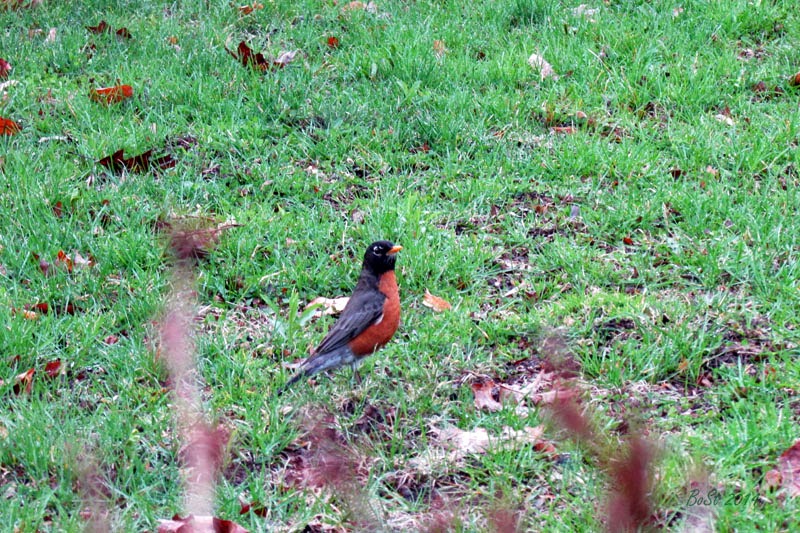
Robins are birds with brown backs and a reddish-orange breast which varies in colour from a rich red maroon to peachy orange. You often see those tugging earthworms out of the ground, which is a sure sign of spring.


 The robin’s head varies from jet black to gray, with white eye arcs. The throat is white with black streaks and the belly and under tail coverts are white as well. The bill is mainly yellow with a variable dark tip, the dusky area becoming more extensive in winter, and the legs and feet are brown.


We all notice them because of their distinct appearance and cheery songs. The male robin, as with many thrushes, has a complex and almost continuous song. Its song is commonly described as a cheerily carol, made up of discrete units, often repeated, and spliced together into a string with brief pauses in between. The song varies regionally, and its style varies by time of day. The robin is often among the first songbirds singing as dawn breaks and the last as the evening sun sets. It usually sings from a high perch in a tree. In addition to its song, the robin has a number of calls used for communicating specific information such as when a ground predator approaches, and when a nest or the robin is being directly threatened.


The American robin is a migratory songbird of the thrush family. It is named after the European robin because of its reddish-orange breast, though the two species are not closely related, with the European robin belonging to the flycatcher family. According to some sources, the American robin ranks behind only the red-winged blackbird (and just ahead of the introduced European starling) as the most abundant land bird in North America. Robins breeds throughout most of North America from Alaska and Canada southward to northern Florida and Mexico. While robins occasionally overwinter in the northern part of the United States and southern Canada, most migrate to Florida and the Gulf Coast or to central Mexico, as well as the Pacific Coast. 


The lone robin is active all through the day and assembles in large flocks at night. Its diet consists of invertebrates such as beetle grubs, earthworms, and caterpillars, fruits and berries. It is one of the earliest bird species to lay eggs, beginning to breed shortly after returning to its summer range. 


A new nest is built for each brood, and in northern areas the first clutch is usually placed in an evergreen tree or shrub while later broods are placed in deciduous trees. The nest is most commonly located above the ground in a dense bush or in a fork between two tree branches and is built by the female alone. The outer foundation consists of long coarse grass, twigs, paper, and feathers. This is lined with smeared mud and cushioned with fine grass or other soft materials. In urban areas the robin sometimes constructs nests under eaves or awnings on human homes when such locations provide adequate shelter. Robins are not cavity nesters, and so will generally not use a bird house, but will take advantage of artificial nesting platforms that have been provided. Robin's egg blue is a color named after the bird's eggs. 


A clutch consists of three to five light blue eggs, and is incubated by the female alone. The eggs hatch after 14 days, and the chicks leave the nest a further two weeks later. The newly hatched chicks are naked and have their eyes closed for the first few days. While they are still young, the mother broods them continuously and are fed are fed worms, insects, and berries. When they are older, the mother will brood them only at night or during bad weather. Waste accumulation does not occur in the nest because adults collect and take it away. All chicks in the brood leave the nest within two days of each other. Even after leaving the nest, the juveniles will follow their parents around and beg food from them. Juveniles become capable of sustained flight two weeks after fledgling. 


The robin usually uses auditory, visual and olfactory means to seek prey, but vision is the predominant mode of prey detection. It also has the ability to hunt by hearing. It typically will take several short hops and then cock its head left, right or forward as a means to detect movement of its prey.

The Robins can be preyed upon by hawks, cats and large snakes. 


The American robin is a known carrier for West Nile virus. While crows and jays are often the first noticed deaths in an area with West Nile virus, the American robin is suspected to be a key host, and holds a larger responsibility for the transmission of the virus to humans. This is because, while crows and jays die quickly from the virus, the American robin survives the virus longer, hence spreading it to more mosquitoes which then transmit the virus to humans and other species. 


The robin has a prominent place in Native American mythology. The story of how the robin got its red breast by fanning the dying flames of a campfire to save a Native American man and a boy is similar to those that surround the European robin. 


The Tlingit people of Northwestern North America held it to be a culture-hero created by Raven to please the people with its song. One of the Houses of the Raven Tribe from the Nisga'a Nation holds the robin as a House Crest. 


Here’s one of the North American legends: 


The Origin of the Robin


From: The Indian Fairy Book , The Original Legends

Author: Cornelius Mathews


An old man had an only son, named Iadilla, who had come to that age which is thought to be most proper to make the long and final fast which is to secure through life a guardian genius or spirit. The father was ambitious that his son should surpass all others in whatever was deemed wisest and greatest among his people. To accomplish his wish, he thought it necessary that the young Iadilla should fast a much longer time than any of those renowned for their power or wisdom, whose fame he coveted.

He therefore directed his son to prepare with great ceremony for the important event. After he had been several times in the sweating-lodge and bath, which were to prepare and purify him for communion with his good spirit, he ordered him to lie down upon a clean mat in a little lodge expressly provided for him. He enjoined upon him at the same time to endure his fast like a man, and promised that at the expiration of twelve days he should receive food and the blessing of his father.

The lad carefully observed the command, and lay with his face covered, calmly awaiting the approach of the spirit which was to decide his good or evil fortune for all the days of his life.

Every morning his father came to the door of the little lodge and encouraged him to persevere, dwelling at length on the vast honor and renown that must ever attend him, should he accomplish the full term of trial allotted to him. 

To these glowing words of promise and glory the boy never replied, but he lay without the least sign of discontent or murmuring until the ninth day, when he addressed his father as follows:

"My father, my dreams forbode evil. May I break my fast now, and at a more favorable time make a new fast?" 


The father answered:

"My son, you know not what you ask. If you get up now, all your glory will depart. Wait patiently a little longer. You have but three days more, and your term will be completed. You know it is for your own good, and I encourage you to persevere. Shall not your aged father live to see you a star among the chieftains and the beloved of battle?"

The son assented; and covering himself more closely, that he might shut out the light which prompted him to complain, he lay till the eleventh day, when he repeated his request. 


The father addressed Iadilla as he had the day before, and promised that he would himself prepare his first meal, and bring it to him by the dawn of the morning.

The son moaned, and the father added:

"Will you bring shame upon your father when his sun is falling in the west?"

"I will not shame you, my father," replied Iadilla; and he lay so still and motionless that you could only know that he was living by the gentle heaving of his breast.

At the spring of day, the next morning, the father, delighted at having gained his end, prepared a repast for his son, and hastened to set it before him. On coming to the door of the little lodge, he was surprised to hear his son talking to himself. He stooped his ear to listen, and, looking through a small opening, he was yet more astonished when he beheld his son painted with vermilion over all his breast, and in the act of finishing his work by laying on the paint as far back on his shoulders as he could reach with his hands, saying at the same time, to himself: 


"My father has destroyed my fortune as a man. He would not listen to my requests. He has urged me beyond my tender strength. He will be the loser. I shall be forever happy in my new state, for I have been obedient to my parent. He alone will be the sufferer, for my guardian spirit is a just one. Though not propitious to me in the manner I desired, he has shown me pity in another way—he has given me another shape; and now I must go." 


At this moment the old man broke in, exclaiming:

"My son! my son! I pray you leave me not!"

But the young man, with the quickness of a bird, had flown to the top of the lodge and perched himself on the highest pole, having been changed into a beautiful robin red-breast. He looked down upon his father with pity beaming in his eyes, and addressed him as follows:

"Regret not, my father, the change you behold. I shall be happier in my present state than I could have been as a man. I shall always be the friend of men, and keep near their dwellings. I shall ever be happy and contented; and although I could not gratify your wishes as a warrior, it will be my daily aim to make you amends for it as a harbinger of peace and joy. I will cheer you by my songs, and strive to inspire in others the joy and lightsomeness of heart I feel in my present state. This will be some compensation to you for the loss of glory you expected. I am now free from the cares and pains of human life. My food is spontaneously furnished by the mountains and fields, and my pathway of life is in the bright air." 


Then stretching himself on his toes, as if delighted with the gift of wings, Iadilla caroled one of his sweetest songs, and flew away into a neighboring wood. 


The End.